
Share this product :
Sodium Hypochlorite
- Origin
- : China
- CAS Number
- : 7681-52-9
- HS Code
- : 2815300
Basic Info
- IUPAC Name
- : sodium hypochlorite solution
- Molecular Formula
- : NaOCl (aqueous)
- Molecular Weight (g/mol)
- : 74.4400
- Synonyms & Trade Names
- : Sodium hypochlorite; Bleach; Chloride of soda; Javelle water
- Purity / Assay (%)
- : 10-15% active Cl
- Grade / Quality Level
- : Industrial Grade
- Physical Form
- : Liquid
- Concentration
- : Pure substance
- Appearance / Color
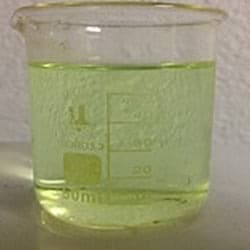
- : Clear to slightly colored liquid
- Odor
- : Chlorine-like
- Boiling Point (°C)
- : >100 (decomposes)
- Density (g/cm³)
- : 1.2000
- Solubility in Water
- : Miscible
- Signal Word
- : Danger
- UN Number
- : 1791
- GHS Hazard Class
- : Oxidizer; Skin corrosive; Aquatic hazard
- H-Statements
- : H272|H290|H314|H400|H410
- P-Statements
- : P210|P220|P221|P234|P260|P264|P270|P273|P280|P301+P330+P331
- REACH Status
- : Registered
- Drug Precursor Status
- : Non-precursor
- Storage Class (GHS)
- : 5.1
- Storage Conditions
- : Cool, dark; away from acids and metals; unstable
Categories
Share this product :
About Sodium Hypochlorite
Sodium hypochlorite is a yellowish liquid with an odor and has a formula of NaClO. It was discovered in 1785 by French chemist Claude Louis Berthollet and was found to bleach cotton and remove stains from clothes at room temperature. To date, it serves as an active ingredient in bleach and is often used as a disinfectant and bleaching agent. Sodium hypochlorite is unstable as chlorine evaporates at a relatively fast rate. It also disintegrates upon heating, contact with acids or sunlight, or poisonous and corrosive gases. When dissolved in water, it forms an aqueous alkali solution due to the presence of caustic soda and serves as a strong oxidator.
Manufacturing Process
Hooker Process Today, the Hooker process is used to industrially produce sodium hypochlorite. Chlorine gas is passed into a dilute and cold solution of sodium hydroxide, and sodium hypochlorite is manufactured via electrolysis. By this process, chlorine gas is simultaneously oxidized and reduced and only a catalytic amount is required for the process. In addition, sodium chloride is produced as the main by-product. Chloralkali Process Earlier in the 19th century, the chloralkali process was used to manufacture sodium hypochlorite industrially via electrolysis of brine. Sodium hydroxide and chlorine gas produced are mixed to form sodium hypochlorite. The Chloralkali process sets to replace the conventional method of passing chlorine gas through a solution of sodium carbonate, as well as the use of chlorinated lime with sodium carbonate, yielding chlorine that is in turn used to manufacture hypochlorite solutions.